

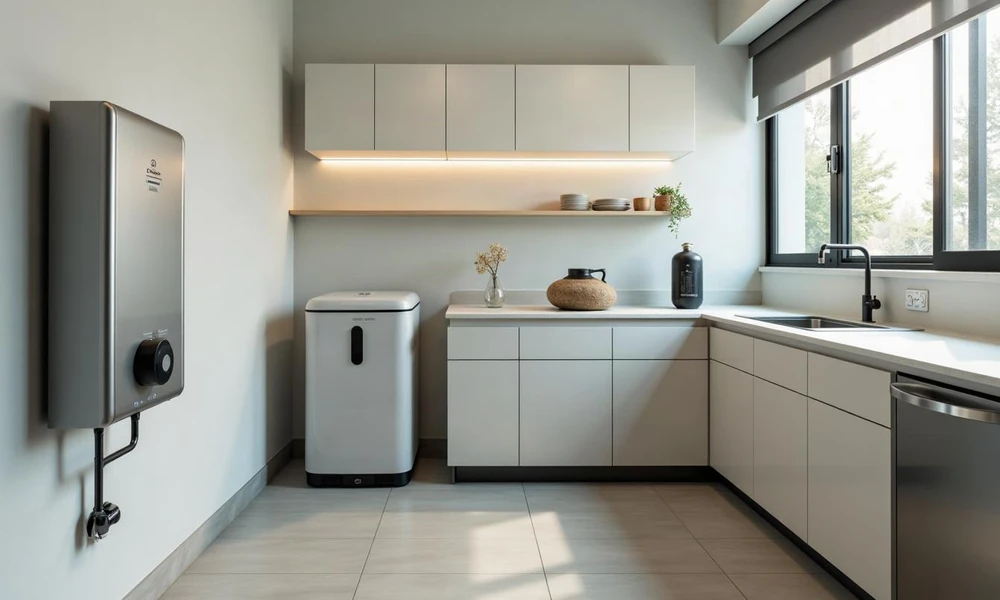
The Choice Is Made at Installation, Not Afterwards
Switching between a direct-piped and a tanked system later usually means new plumbing work or disposing of a unit that still has years of service in it. That makes this one of the few pantry decisions worth resolving carefully upfront. Both types of water boiler dispensers in Singapore deliver hot water reliably, and they differ in ways that affect installation cost, ongoing running expense, and how much routine effort the pantry generates for whoever manages it. Three differences account for most of the decision.
1. Installation Requirements and Pantry Footprint
Direct-piped units connect to the building’s water supply, which requires a plumbing point within reach of the intended location and, in most cases, a drainage connection. Where the pantry already has a sink with accessible supply and drainage, installation is straightforward. Where it doesn’t, running new plumbing through a fitted-out office can be disruptive and expensive, particularly in leased premises where landlord approval and reinstatement obligations apply.
Tanked units need only a power point, which makes them viable almost anywhere. They do, however, require floor or counter space for the unit plus storage space for replacement bottles, which is frequently underestimated. A pantry with limited storage may find bottles occupying space intended for other purposes.
2. Ongoing Running Costs and Supply Logistics
Direct-piped systems draw from the mains, so the recurring cost is filtration cartridges and servicing rather than water itself. For a high-consumption office, this usually produces lower ongoing costs once the higher installation expense is absorbed, and consumption can rise without a corresponding rise in supply cost.
Tanked systems carry a recurring cost per bottle, which scales directly with usage. They also require someone to order, receive, store, and change bottles, and to notice when stock runs low. In a busy office that task usually falls to an administrator alongside other duties, and a missed order means no hot water until the next delivery arrives.
Comparing the Two System Types
| Factor | Direct-Piped | Tanked |
| Installation | Needs plumbing and usually drainage access | Requires only a power point |
| Space required | Compact, no bottle storage needed | Unit plus storage for replacement bottles |
| Ongoing cost | Filters and servicing, not per litre | Recurring per-bottle cost scaling with usage |
| Routine effort | Periodic filter changes by technician | Regular ordering, storage, and bottle changes |
| Suits | High-consumption offices with plumbing access | Smaller offices, temporary premises, no plumbing |
3. Maintenance Demands and Continuity of Supply
Direct-piped units require scheduled filter replacement and periodic servicing, typically handled by a technician under contract. Between visits, the unit operates without attention. The dependency is on water supply and filtration condition, and a filter left overdue affects water quality gradually rather than stopping supply.
Tanked units require no plumbing maintenance but depend on a reliable delivery schedule. Supply interruptions, whether from a missed order or a supplier delay, stop hot water availability entirely. Lifting and fitting replacement bottles is also a physical task that not every staff member can comfortably perform, which is worth considering in smaller offices where one person tends to handle it.
Matching the System to Your Premises and Usage
The decision usually resolves around two questions: whether plumbing access exists in the intended location, and how much hot water the office actually consumes. High-consumption offices with accessible plumbing generally find direct-piped systems cheaper over a few years and considerably less administratively demanding. Smaller offices, short-term leases, or locations where plumbing work isn’t feasible are often better served by a tanked unit despite the recurring supply cost. Discussing both options with a supplier of office water solutions in Singapore who will survey the pantry before recommending, rather than quoting against headcount alone, tends to produce a more suitable outcome than choosing from a catalogue.
Contact Pure Water Dispensers to arrange a pantry survey and compare direct-piped and tanked options for your office’s consumption level.
